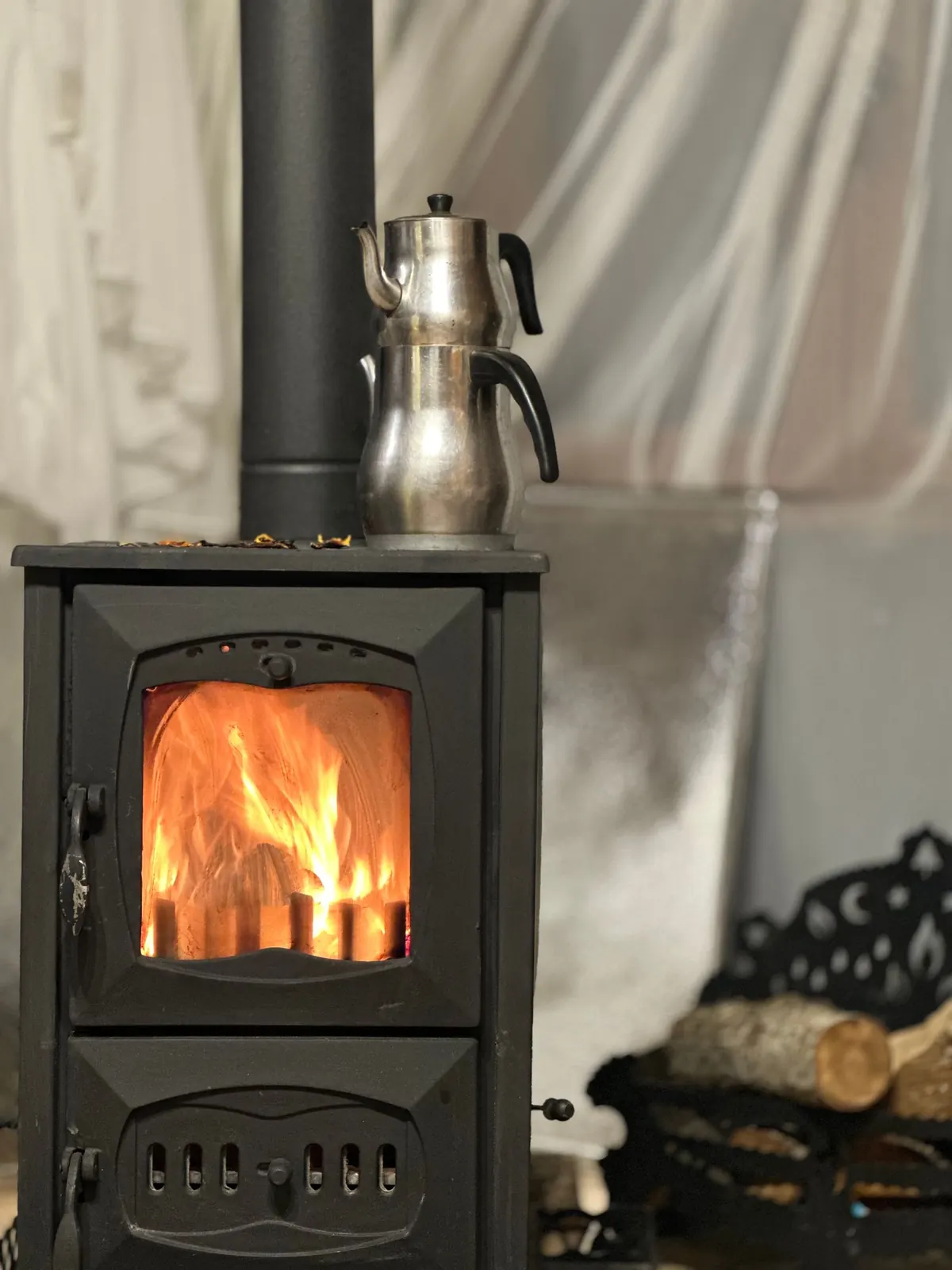
Wood Stove, Pellet Stove and Insert Cleaning
A stove pushes its exhaust through a narrow pipe and liner, so buildup restricts it faster than an open fireplace. We clean the stove, the connector and the flue, priced at the free inspection.
Stoves and inserts are popular with owners who actually want heat from the fire, not just the look of it. They burn more efficiently than an open fireplace, but the exhaust runs through a smaller pipe and, in a masonry chimney, usually a liner, and that tighter path clogs faster. A pellet stove has the same problem in a different form: fine ash packs into the vent and the combustion passages behind the firebox.
Every stove setup is different, which is why the cleaning is priced at the free inspection. A freestanding stove with a short pipe is a quicker job than an insert that has to be slid out of the fireplace to reach the liner connection. We look at the stove, the pipe or liner and the chimney top, show you photos, and write the price down before we start.
Signs you need this
- The glass blackens within one or two fires
- The stove is hard to get going or won't hold a fire at a low setting
- A pellet stove that shuts off, throws an error or smells of smoke
- Smoke puffing out when you open the loading door
- A full heating season since the stove and liner were last cleaned
How we do it
- Free inspectionWe check the stove, door gaskets, baffle, pipe or liner, and the cap and crown up top.
- Open up the stoveBaffles and firebricks come out where needed so we can reach the space above the firebox.
- Clean pipe and flueThe connector pipe and liner are brushed top to bottom; an insert is pulled out when the connection can't be reached otherwise.
- Reassemble and testEverything goes back in place, we check the draft, and you get before and after photos.
Why stoves need cleaning on their own schedule
CSIA's guidance on factory-built units is to clean when any noticeable buildup has formed, because the deposits are acidic and work on metal parts and liners over time. A stove burned every evening from November to March can reach that point in one season.
Pellet stoves produce far less creosote, but they make a lot of fine ash. Left in the vent and the heat-exchanger passages, it chokes the airflow until the stove's own safety controls start shutting it down.
Inserts in old Chicago fireplaces
Many inserts here sit in fireplaces built in the 1920s or earlier. The insert needs its own liner running from the stove collar to the top of the chimney. If we find an insert vented straight into the old clay flue or the smoke chamber, we photograph it and explain what needs changing, because a short connection like that collects creosote where no brush can reach.
Things to tell us when you book
Knowing a few details ahead of time helps us bring the right gear.
- Stove, insert or pellet unit, and the brand if you know it
- Whether it vents through a masonry chimney or a metal pipe through the roof
- How often you burn and what you burn
- Any smoke, smells, error codes or shutdowns you have noticed
FAQ
Wood & Pellet Stove Cleaning questions
How often should a wood stove be cleaned?
At least once a year if you burn regularly, and sooner if a noticeable layer builds up. We check at the free inspection and tell you honestly if it can wait.
Do I need a liner for a wood stove or insert?
An insert or stove venting into a masonry chimney should have a liner that runs from the appliance to the top of the chimney. The stove's installation instructions spell out what it was tested with, and we check against them.
Do you clean pellet stoves?
Yes. We clean the burn pot, ash traps, heat-exchanger passages and the vent pipe.
Does the insert have to come out?
Only when the liner connection can't be reached from above or through the insert. If it does, that is included in the price written at the inspection.
How much does stove cleaning cost?
It depends on the setup, so it is priced at the free inspection, in writing, before any work starts.
Related
Cleaning, inspections and smoke

Book online
Pick a day. We'll bring a ladder.
Free inspection in a 3-hour window: 8 to 11, 11 to 2, or 2 to 5. We call to confirm before we arrive.