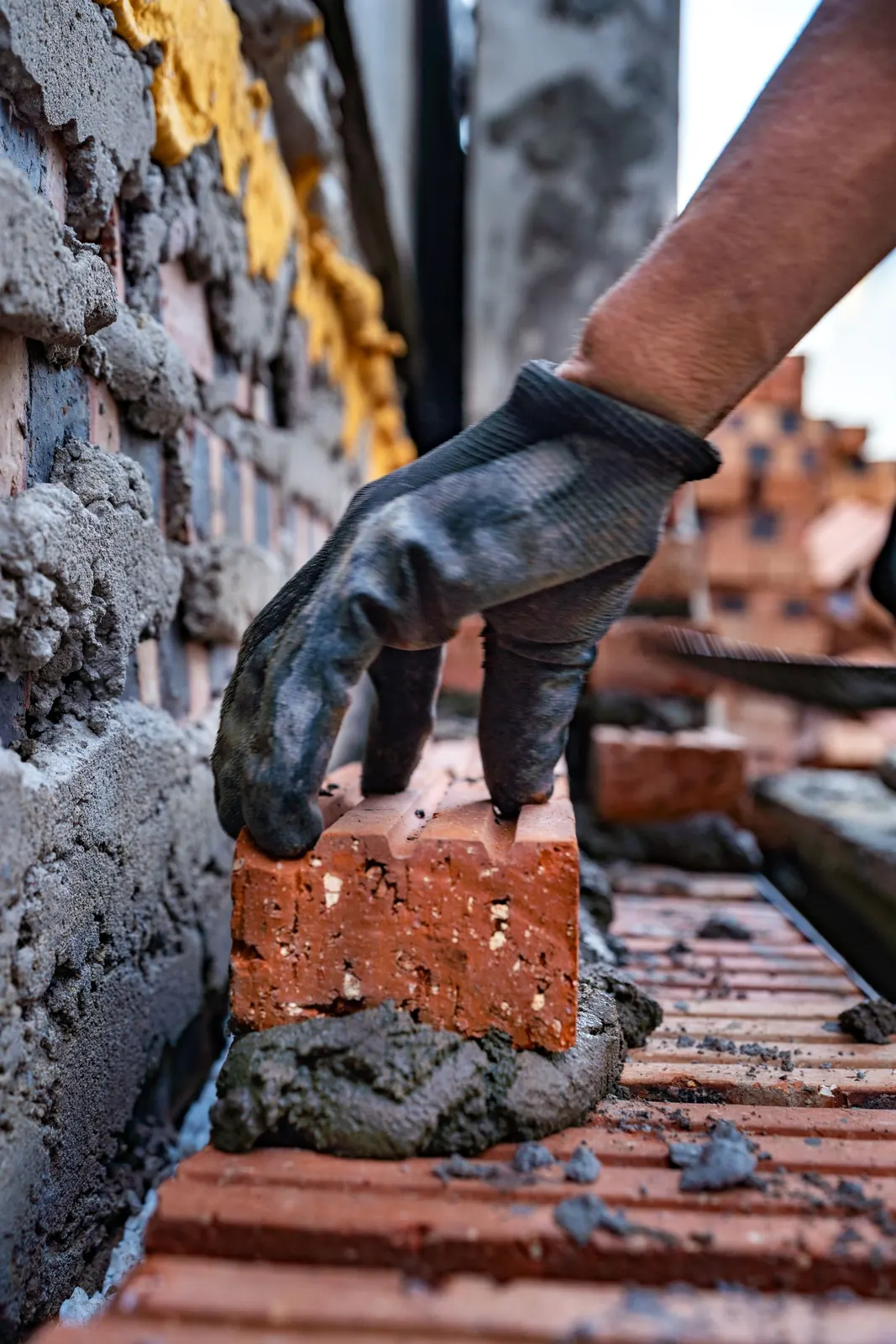
Breathable Waterproofing for Chicago Brick Chimneys
A clear, penetrating repellent that makes rain and snowmelt bead off the brick while moisture inside the stack can still dry out. We apply it to sound masonry only, typically $150 to $820+.
A chimney above a Chicago roof is wet more often than it is dry. O'Hare averages 38.4 inches of snow a year (NOAA 1991–2020 normals), and the stack collects drifts on its windward side, then sits in melt on every sunny afternoon. By our reading of the same NOAA normals there are about 78 days a year at O'Hare when the night drops below freezing and the day climbs back above it. Water that soaked into the brick in the afternoon turns to ice that night.
A breathable repellent lowers how much water the brick takes in. It sinks into the pores of the brick and mortar rather than forming a skin on top, so rain beads and runs off while vapor already in the masonry can still escape. We only put it on after the crown, flashing and joints are in good shape. No coating closes a crack or fills a joint that has eroded back.
Signs you need this
- Brick that stays dark for days after the snow is gone
- White salt bloom (efflorescence) streaking down the stack
- Faces of bricks flaking off each spring
- A damp spot or peeling paint on the chimney breast indoors
- Sand from the joints collecting in the gutter below the chimney
How we do it
- Free inspection of the stackWe look at the crown, cap, flashing, joints and brick faces and photograph every place water can get in.
- Repair the openings firstOpen joints, a cracked crown or loose flashing get fixed and priced on their own, so the repellent never goes over an active leak.
- Wait for dry, mild weatherRepellent only soaks into dry masonry above freezing, so we book the coat for a dry stretch and brush off loose material first.
- Saturate each faceWe work from the top down until each side stops absorbing, with the roof, siding and windows covered.
Why breathable, not paint or a glossy sealer
Water reaches a chimney from inside as well as outside. A gas furnace or water heater sends vapor up the flue, and the base can wick water from the roof deck. A film coating traps that moisture in the brick. When it freezes behind the film, the face of the brick pops off.
The National Park Service's Preservation Brief 2 says new mortar must be softer and more vapor-permeable than the brick it sits in. A repellent follows the same idea: it cuts the water coming in without sealing the surface shut. On Chicago common brick, which was made from local clay and hasn't been produced since 1981, that matters, because a spalled common has to be replaced with a salvaged one.
Where it pays off most
Tall stacks on two-flats and bungalows, chimneys that face the lake, and anything north of the city that catches lake-effect bands. In the November 9–10, 2025 event, the National Weather Service in Chicago logged 10.0 inches at Winthrop Harbor, 5.7 inches in West Ridge and 5.2 inches near Evanston, while O'Hare got 1.7. Snow that heavy piles against one side of a stack and melts into it for days.
It pays off least on a chimney with a cracked crown or failed flashing. Those come first, and sometimes they are all the chimney needed.
Cost and how long it lasts
Breathable repellent typically runs $150 to $820+ in 2026, depending on the height of the stack, the roof pitch and how much brick is exposed. The exact number is written down at the free inspection. Repellents wear with sun and weather, so at later inspections we splash the brick to see whether water still beads or has started soaking in.
FAQ
Breathable Chimney Waterproofing questions
Will waterproofing stop my chimney leak?
Only if the water is coming through the brick itself. Most leaks we find start at the crown, the flashing or a missing cap. The free inspection tells you which one before you pay for a coating.
Can you waterproof a chimney in winter?
Not properly. The brick has to be dry and above freezing for the repellent to soak in, so we schedule it from spring through early fall. Repairs that stop an active leak can usually happen sooner.
Do I need tuckpointing before waterproofing?
If the joints are open or recessed, yes, because a repellent does not fill gaps. We repoint with a mortar softer than the brick, as NPS Preservation Brief 2 recommends for historic masonry.
Will it change how my brick looks?
A penetrating repellent dries clear with little or no sheen. If your house is in a Chicago Landmark district, ask the Historic Preservation Division whether the coating needs review before we schedule it.
How does freeze-thaw damage a chimney?
Water held in the brick and mortar expands when it freezes. With about 78 freeze-thaw days a year at O'Hare (derived from NOAA normals), that push repeats dozens of times a winter until joints open and brick faces let go.
Related
Masonry, leaks and rebuilds

Book online
Pick a day. We'll bring a ladder.
Free inspection in a 3-hour window: 8 to 11, 11 to 2, or 2 to 5. We call to confirm before we arrive.