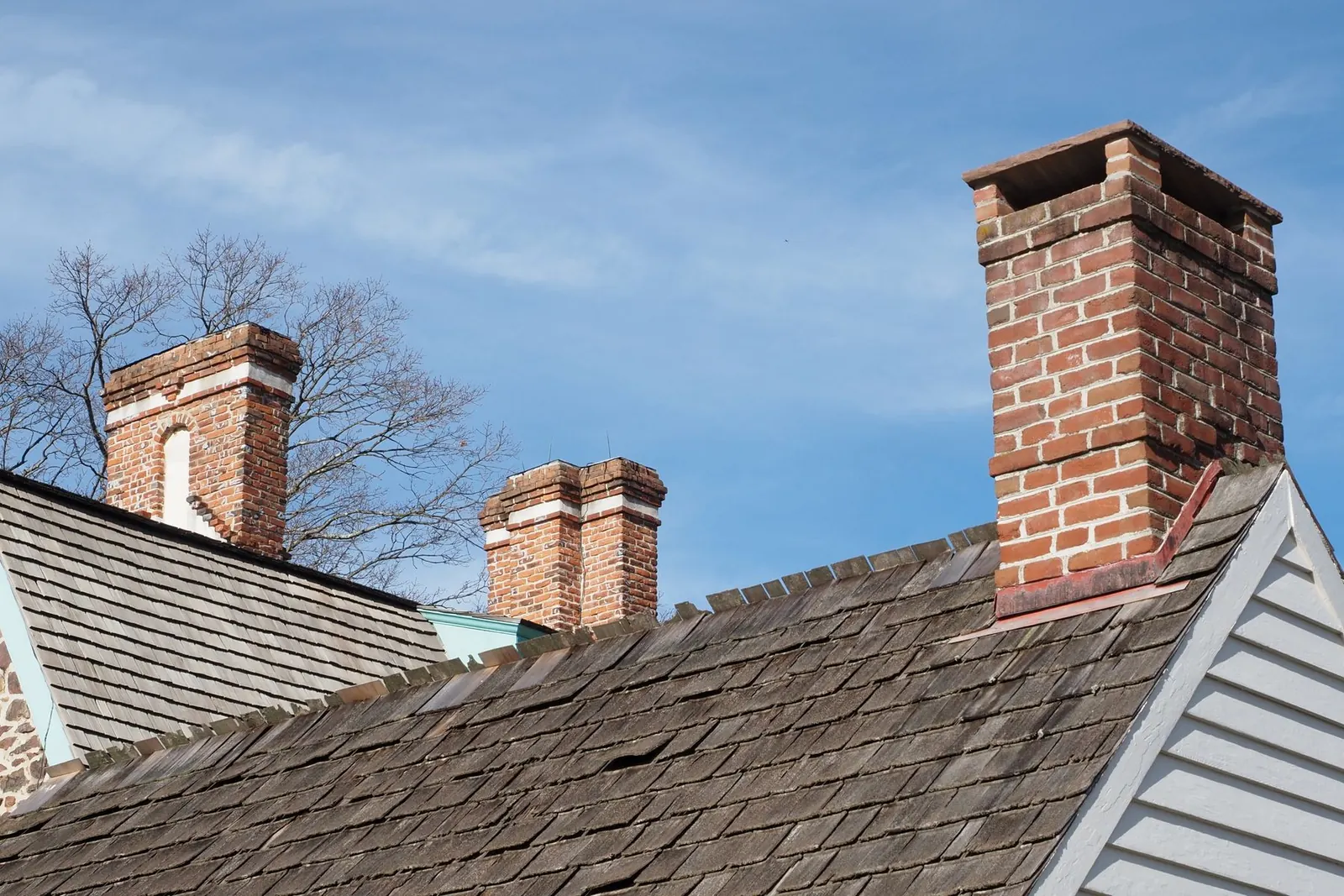
Chimney Flashing Repair and Replacement
Most leaks next to a chimney come in where the brick meets the roof. We rebuild the flashing in layers so water and snowmelt run past the joint instead of into it.
Flashing is the metal that seals the joint between the chimney and the roof. It needs two layers to work: step flashing woven into the shingles, and counter-flashing set into the mortar joints of the chimney and folded down over it. On many older Chicago houses, one of those layers is missing or was replaced with a smear of roofing tar that cracked years ago.
Snow makes it worse. O'Hare averages about 38 inches a year in NOAA's 1991 to 2020 normals, and snow piles up on the uphill side of a chimney, melts in the sun and refreezes at the edge. That water sits against the flashing for days. Flashing repair or replacement typically costs $300 – $1,800. A cricket on a wide chimney is priced at the inspection. The leak check is free.
Signs you need this
- A water stain on the ceiling or wall next to the chimney
- Leaks that show up during snowmelt or heavy rain but not light rain
- Tar or caulk smeared along the joint between the chimney and the roof
- Counter-flashing pulling out of the mortar joints
- Rotted roof deck or wet insulation next to the chimney in the attic
How we do it
- Find the leakWe check the flashing, the crown and the brick above it, because water from up there often shows up at the flashing.
- Remove the old workOld flashing, tar patches and damaged shingles around the chimney come off.
- New flashing in layersStep flashing goes in with the shingles, and counter-flashing is cut into the mortar joints and folded over it.
- Add a cricket if neededA wide chimney gets a cricket on its uphill side so water and snow go around instead of pooling.
Why caulk is not flashing
Sealant along the chimney joint can stop a drip for a season. Then the roof and chimney move at different rates, the bead cracks, and water gets in again, often behind the sealant where it can't dry. We use sealant only where it belongs, at the top edge of counter-flashing set into a cut joint, not as a replacement for metal.
If your flashing is mostly tar, the right fix is new flashing.
What a cricket does
A cricket, sometimes called a saddle, is a small peaked roof built behind a wide chimney. Without one, snow and water collect in the flat space on the uphill side, which is exactly where ice dams form in a Chicago winter. With one, water is split to either side and runs off. On wide chimneys, such as a two-flat stack with several flues, it often makes the difference.
Flashing and the rest of the chimney
Not every leak at the flashing is a flashing leak. Water soaking through open mortar joints or a cracked crown above the roof runs down inside the brick and comes out right at the flashing line. We check the whole stack above the roof before replacing anything, so you don't pay for flashing that doesn't fix the leak.
FAQ
Chimney Flashing Repair questions
How much does chimney flashing repair cost?
Flashing repair or replacement typically runs $300 – $1,800, depending on the size of the chimney and the roof. A cricket is priced at the inspection, and the leak check is free.
Do the shingles around the chimney cause leaks?
They can, if the step flashing woven under them is missing or rusted. The shingles alone can't seal the joint; the flashing has to.
What does chimney flashing look like when it's done right?
Step flashing under each course of shingles, counter-flashing cut into the brick joints and folded down over it, and a cricket behind a wide chimney.
Can chimney flashing just be caulked?
As a short-term patch, maybe. Caulk cracks as the roof and chimney move. New flashing is the lasting fix.
Why does it only leak when the snow melts?
Snow piles against the uphill side of the chimney, melts and refreezes at the edge, holding water against the flashing. A worn joint or a missing cricket lets it through.
Related
Masonry, leaks and rebuilds

Book online
Pick a day. We'll bring a ladder.
Free inspection in a 3-hour window: 8 to 11, 11 to 2, or 2 to 5. We call to confirm before we arrive.