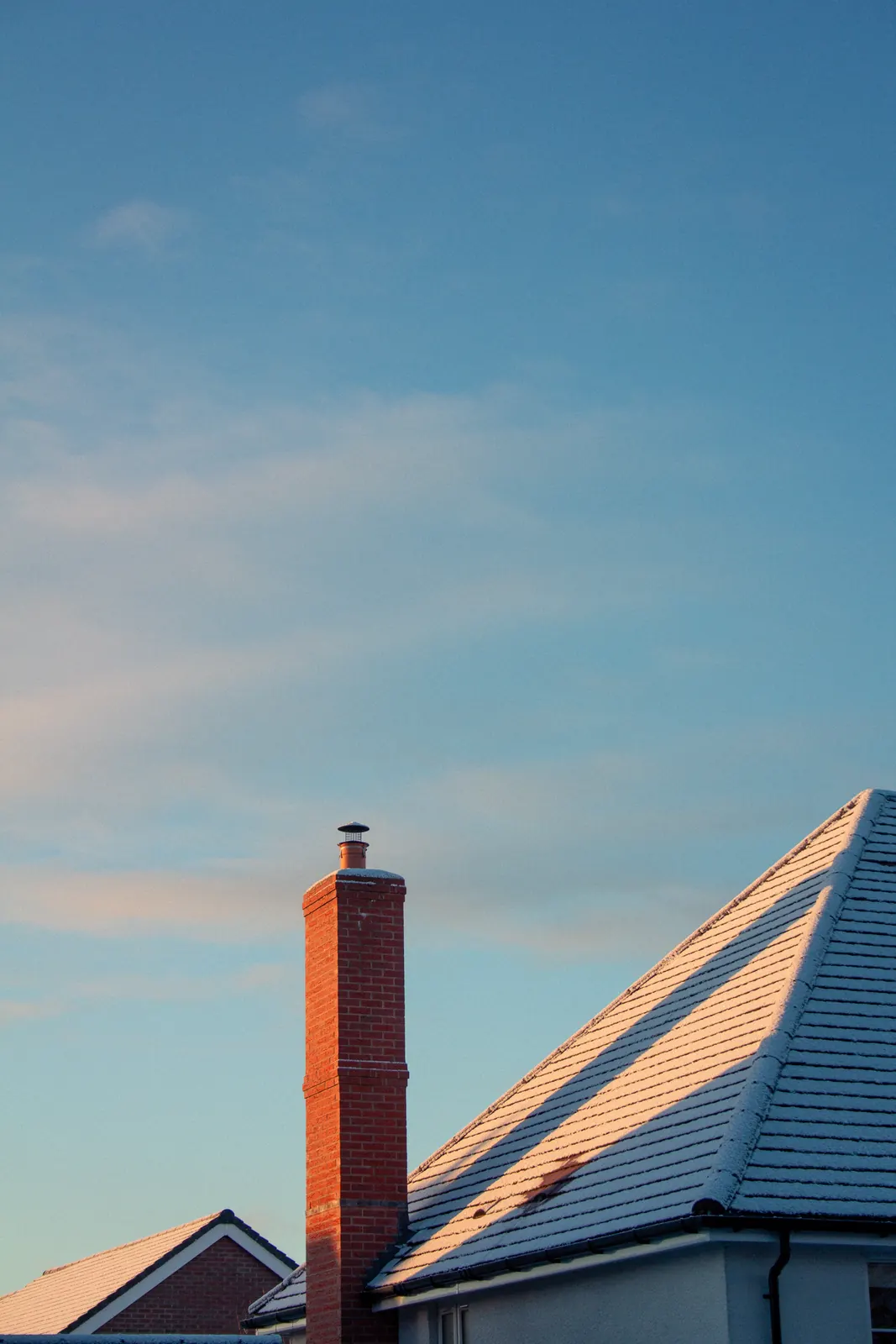
Chimney Caps and Chase Covers
A cap keeps rain, snow, birds and raccoons out of the flue, and a chase cover closes the top of a prefab chimney. Typical installed price runs $200 to $850.
A surprising number of chimneys in Chicago have no cap at all. Snow and rain fall straight down the flue, wet the tile and the damper, and mix with soot into a smell that fills the room on humid days. Squirrels, birds and raccoons treat an open flue as a nest box. A cap with a mesh screen stops both problems for less than most chimney repairs.
Newer suburbs have a different problem. In Naperville the median home was built in 1990, and in Orland Park in 1989 (Census ACS 2020–24). Many of those houses have factory-built fireplaces inside a framed chase with a metal cover on top. Cheap galvanized covers rust, hold water in the middle, and drip it down the inside of the chase.
Signs you need this
- No cap or screen on top of the chimney
- Scratching or chirping inside the flue
- Water or rust in the firebox after rain or snowmelt
- A musty or sour smell from the fireplace in damp weather
- Rust streaks on the siding below a prefab chimney
How we do it
- Free inspectionWe measure each flue, check the crown under the cap, and look for water and animal damage inside.
- Pick the capA prefab stainless cap for a single round or square flue, or a custom cap or chase cover when the top is wide, odd-sized or has several flues.
- Fit it securelyWe fasten the cap so Chicago winds can't lift it, with mesh sized to keep animals out without choking the draft.
- Photograph the finished topYou get before and after photos of the chimney top.
Cap, crown and chase cover: what's the difference?
A crown is the concrete or mortar slab that covers the top of a masonry chimney around the flue. A cap is the metal hood with a screen that sits over the flue tile. A chase cover is the metal lid on top of a framed, sided chimney that houses a factory-built fireplace flue. Each keeps out water in a different way, and a leak can come from any of them.
Caps in lake-effect country
North of the city, lake-effect bands can stack snow fast. In the November 9–10, 2025 event the National Weather Service logged 10.0 inches at Winthrop Harbor and 5.0 inches in Gurnee. A cap stops that snow from filling an open flue, and a chase cover with a slope and a drip edge sheds melt instead of collecting it.
We use caps that are mesh-screened and fastened to the flue or crown, built to current code. Where a cap would go over several flues, we size it so each one keeps clear airflow.
What a chimney cap costs
Typical 2026 prices: a prefab metal cap installed runs $200 to $650. A custom cap or chase cover runs $425 to $850. The full range for chimney caps is $200 to $850. A cap that also seals the flue with a top damper typically runs $140 to $420. You get the price in writing at the free inspection.
FAQ
Chimney Caps & Chase Covers questions
How much should a chimney cap cost?
Installed, a prefab metal cap typically costs $200 to $650 in 2026, and a custom cap or chase cover $425 to $850. Your exact price is set at the free inspection.
How does a chimney cap work?
It is a metal hood over the flue with a mesh screen around the sides. The hood sheds rain and snow, the mesh keeps animals out, and smoke still leaves through the screen.
Why doesn't my chimney have a cap?
Many older Chicago chimneys were built without one, and caps get blown off or rust away. An open flue lets in water and animals, so a cap is one of the cheapest fixes on a chimney.
What is a chase cover?
It is the metal lid on top of a framed chimney that encloses a factory-built fireplace flue, common in newer suburbs. When it rusts or sags it can leak into the chase, so we replace it with a cover that sheds water.
How do I get a dead bird or animal out of my chimney?
Don't light a fire to drive it out. Animal removal from a chimney typically costs $600 to $1,500, and a cap afterward keeps it from happening again.
Related
Liners, caps, dampers and fireboxes

Book online
Pick a day. We'll bring a ladder.
Free inspection in a 3-hour window: 8 to 11, 11 to 2, or 2 to 5. We call to confirm before we arrive.