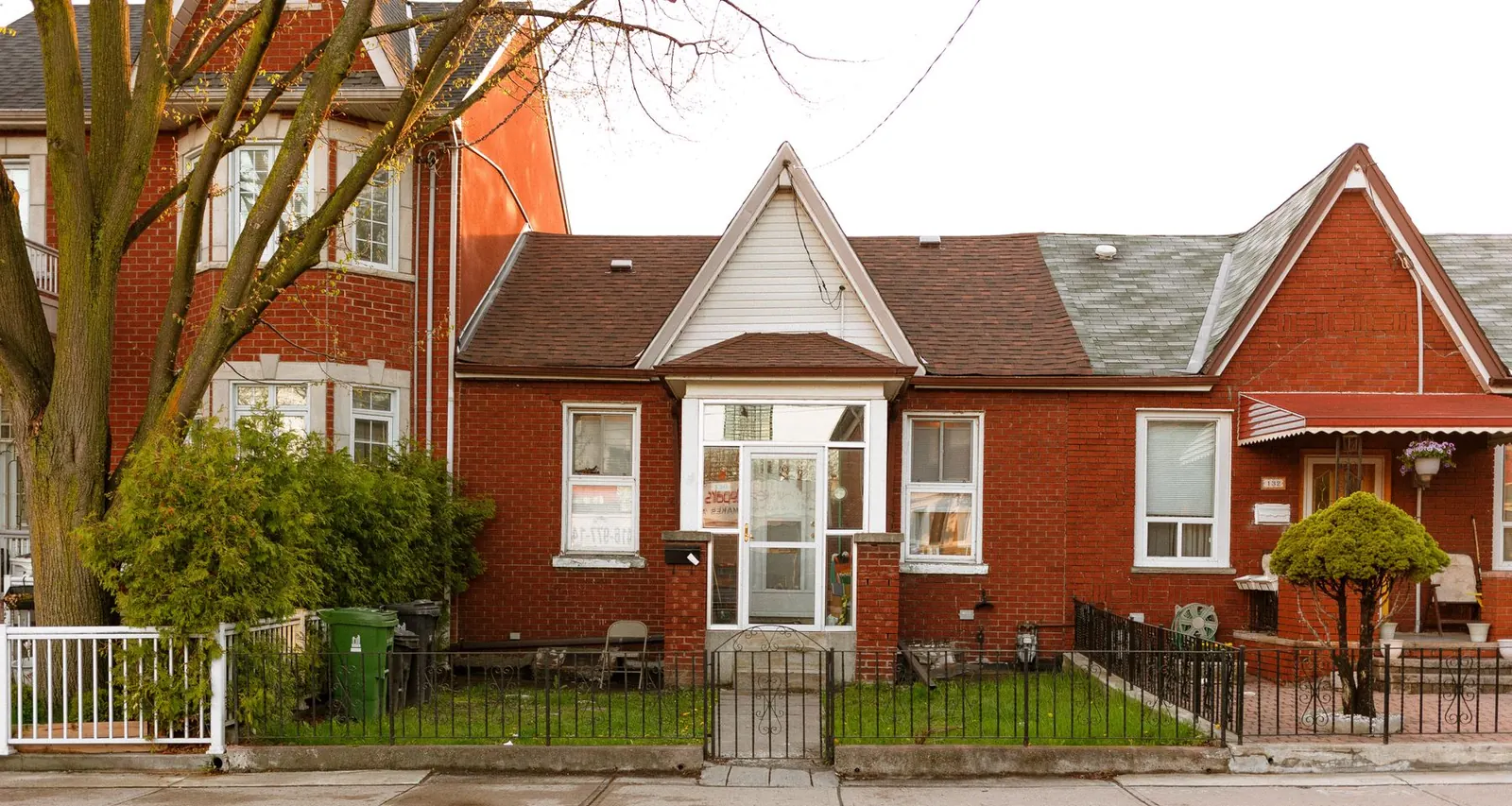
Chimney Repair for Chicago Bungalows and Two-Flats
These chimneys were built from Chicago common brick that no one has made since 1981. We repair them with mortar softer than the brick and salvaged commons that match.
The Chicago Bungalow Association counts more than 80,000 bungalows still standing, nearly a third of the city's single-family homes. Most went up between 1910 and the mid-1930s: brick, a story and a half over a full basement, with a low hipped roof. The brick two-flat is their close cousin, often built in the same years by the same developers, and the association describes it as basically a stacked Chicago bungalow. Census figures show 13.1% of city homes in two-unit buildings, about four times the national share, and 15.1% in Berwyn.
Their chimneys usually sit on the side or back of the house, which is where builders used Chicago common brick. According to Brick of Chicago, commons were made from local clay and fired buff, salmon pink or deep red, and kept off the street front because they were rougher than face brick. The last maker closed in 1981. Matching a repair means salvaged commons, and keeping it from failing means the right mortar.
Signs you need this
- Brick faces popping off near the top of the stack after winter
- Gray, hard-looking mortar patches with cracked brick around them
- Mortar joints sanding out, especially on the side facing the weather
- A crown that is just a thin mortar wash over the top course
- A stack shared by two units, with flues for two fireplaces, a boiler and a water heater
How we do it
- Inspect and test the mortarWe look at the brick, the joints and earlier repairs, and judge how hard the existing mortar is against the brick.
- Match brick and mortarWe source salvaged commons close in color and size, and mix a lime-rich mortar softer than the brick.
- Repair by handJoints are raked out without cutting into the brick edges, spalled brick is replaced, and joints are repacked and tooled to match.
- Top it properlyWhere needed, the top courses are rebuilt and a new crown and cap go on, built to current code.
Why hard mortar ruins old Chicago brick
The National Park Service's Preservation Brief 2, the standard guide to repointing historic masonry, says new mortar must be softer and more vapor-permeable than the brick. Mortar that's harder than the brick won't give as the wall moves, so the stress goes through the brick instead, causing cracking and spalling. It also traps moisture that would otherwise leave through the joints.
Many bungalow and two-flat chimneys have been patched over the decades with modern, cement-heavy mortar. When we see a neat gray patch surrounded by brick that has lost its face, that is usually why. The fix is to take the hard mortar out, replace the damaged brick and repoint with a lime-rich mix suited to the brick.
Matching Chicago common brick
Commons vary from buff yellow to salmon to deep red, sometimes on the same chimney. Since nobody has made them since 1981, a matching repair uses salvaged brick. We look for commons close in color, size and texture, and set them so the repair blends rather than standing out as a patch of new red brick.
In a Chicago Landmark district, matching matters for another reason: the Historic Preservation Division reviews permits there, and we help you prepare the photos and scope for that review.
Two-flats: one chimney, two households
A two-flat chimney often carries a fireplace flue for each unit along with a boiler and a water heater, all in one stack. A repair has to account for every flue. Owners also carry the city's carbon monoxide duties: an alarm within 15 feet of sleeping rooms, inside any bedroom with a fireplace, and in the same room as each furnace, boiler and water heater. The occupant tests them; the owner provides them.
Repair prices: stack tuckpointing in a mortar matched to the brick typically runs $500 – $2,500, spalled brick replaced with salvaged commons $1,000 – $3,500, and a rebuild above the roofline $1,000 – $3,500. The inspection and mortar check are free.
FAQ
Bungalow & Two-Flat Chimneys questions
Can I still use my bungalow fireplace?
Often, yes, but only after the flue has been inspected. Many bungalow fireplaces went decades unused, and the tile, damper and crown need checking before the first fire. The inspection is free.
What is Chicago common brick, and can my chimney be matched?
It's brick made from local clay and used on the sides, backs and insides of buildings. The last maker closed in 1981, so we match repairs with salvaged commons.
Why is my chimney's brick flaking around a newer patch?
The patch was likely done with mortar harder than the brick. The NPS says repointing mortar must be softer than the brick, or the brick cracks and spalls instead.
In a two-flat, who's responsible for the chimney and CO alarms?
The owner maintains the chimney and provides CO alarms. In Chicago the occupant keeps batteries working and tests them, and owners face fines of $500 to $2,000 per day for missing alarms.
Why does our two-flat chimney have several flues?
Each appliance and fireplace needs its own flue, so a two-flat stack may hold one for each unit's fireplace plus the boiler and water heater.
What does bungalow chimney repair cost?
Tuckpointing typically runs $500 – $2,500, salvaged-brick replacement $1,000 – $3,500, and a rebuild above the roofline $1,000 – $3,500.
Related
Masonry, leaks and rebuilds

Book online
Pick a day. We'll bring a ladder.
Free inspection in a 3-hour window: 8 to 11, 11 to 2, or 2 to 5. We call to confirm before we arrive.