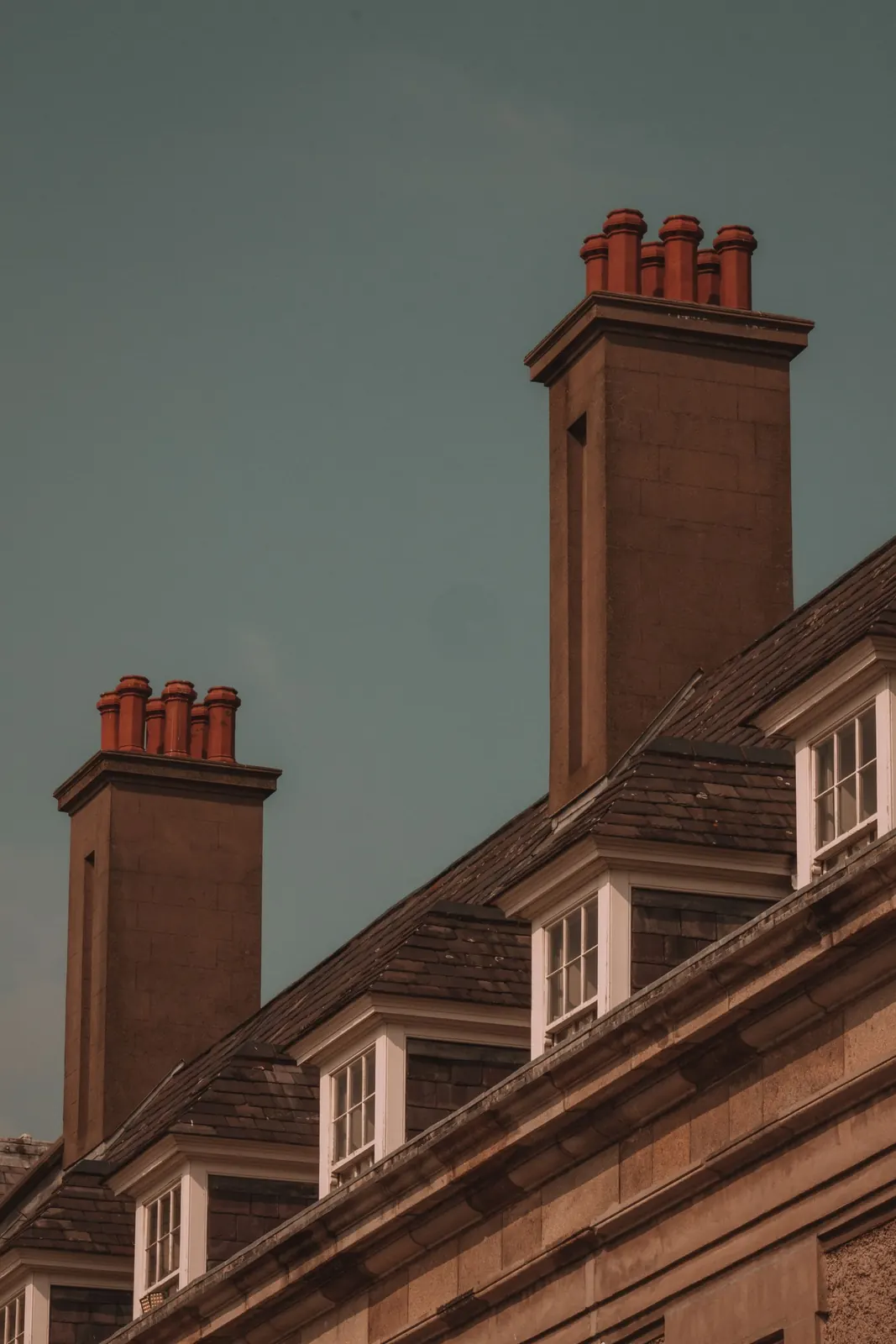
Chimney Liners and Relining for Older Flues
Many Chicago chimneys still have their original clay tile flue, and some never had one. When the tile is cracked, gapped or missing, we reline it in stainless steel or with a cast-in-place liner.
The flue is the passage inside a chimney that carries smoke and exhaust up and away from the house. In much of Chicago it is a stack of clay tiles that went in when the house was built. That is a long time ago: 38.8 percent of the city's homes were built before 1940, and in Berwyn and Oak Park the share is about 60 percent (Census ACS 2020–24). Tiles crack from heat, settle out of line, lose the mortar between them, or were never installed at all.
A cracked or missing liner lets heat reach the wood framing around the chimney and lets exhaust seep into the brick and sometimes into the house. NFPA 211 calls for chimneys to be inspected every year for soundness and correct clearances for this reason. A new liner restores a sealed, correctly sized path to the top.
Signs you need this
- Pieces of clay tile falling into the firebox or the cleanout
- Cracks or gaps between tiles visible from the top
- A fireplace that has never drawn well
- A chimney with no tile liner at all
- Planning to add a wood stove or gas insert to an old chimney
How we do it
- Inspect the flueThe visual inspection from top to bottom is free. If the damage is hidden mid-flue, a camera scan is priced at the inspection.
- Choose the liner typeStainless steel suits most wood and gas jobs. Cast-in-place makes sense when an old flue is irregular or needs strength added back.
- Clear the wayBroken tile is removed when the new liner needs the room, priced separately and shown on the quote.
- Install and capThe liner goes in, connects at the bottom, and is capped at the top. We check the draft before we leave.
Stainless steel or cast-in-place?
A stainless steel liner is a round or oval pipe run down the existing flue and connected at the firebox or appliance. It is the usual choice when the chimney is straight enough and the masonry around it is sound. Installed, it typically runs $900 to $3,800 in 2026.
A cast-in-place liner is a cement mix poured or formed inside the old flue around an inflatable form, building a smooth new flue that also bonds to the masonry. It suits irregular flues and old chimneys that need structural help, and typically runs $2,000 to $7,000. When old clay tiles have to come out first, removal typically adds $500 to $2,500.
Does every chimney need a liner?
A chimney that carries smoke or exhaust needs a sound liner sized for whatever it serves. NFPA 211, the national standard for chimneys, calls for a yearly inspection for soundness, freedom from deposits and correct clearances. A gas appliance, a wood fireplace and a wood stove each need different sizing, and each appliance generally needs its own flue. Chicago has its own construction codes rather than the national residential code, so new liners are built to current code for the city or town they are in.
Liners and permits
We found no City of Chicago page that names chimney liners specifically, and rules differ from suburb to suburb. We check what your city requires before we schedule, and we tell you plainly if your job needs a permit.
FAQ
Chimney Liners & Relining questions
How much does a chimney liner cost?
Stainless steel typically costs $900 to $3,800 installed in 2026, and a cast-in-place liner $2,000 to $7,000. Taking out old clay tile first, when it's needed, typically adds $500 to $2,500.
Are chimney liners worth it?
For a chimney that you use, yes. A sound liner keeps heat away from the framing, keeps exhaust inside the flue and sizes the flue to the appliance so it drafts. It is often the difference between a fireplace you can use and one you shouldn't.
Does a chimney liner need to be insulated?
It depends on the liner's listing and the clearances around your chimney. Some installations need insulation to meet the maker's requirements. We tell you what your flue needs at the inspection.
Do I need a liner for a wood stove or insert?
In most older Chicago chimneys, yes. The stove's maker sets the liner size, and a stove connected to a big old clay flue usually drafts poorly and builds creosote. We size the liner to the stove.
Does my bungalow chimney need a liner?
Many bungalows from 1910 to the mid-1930s still have original tile that has cracked or shifted, and some flues were never lined. The free inspection with photos shows what yours has.
Related
Liners, caps, dampers and fireboxes

Book online
Pick a day. We'll bring a ladder.
Free inspection in a 3-hour window: 8 to 11, 11 to 2, or 2 to 5. We call to confirm before we arrive.